
Why Divers Use a Full Face Mask
Sean Cowher Feb 28, 2026
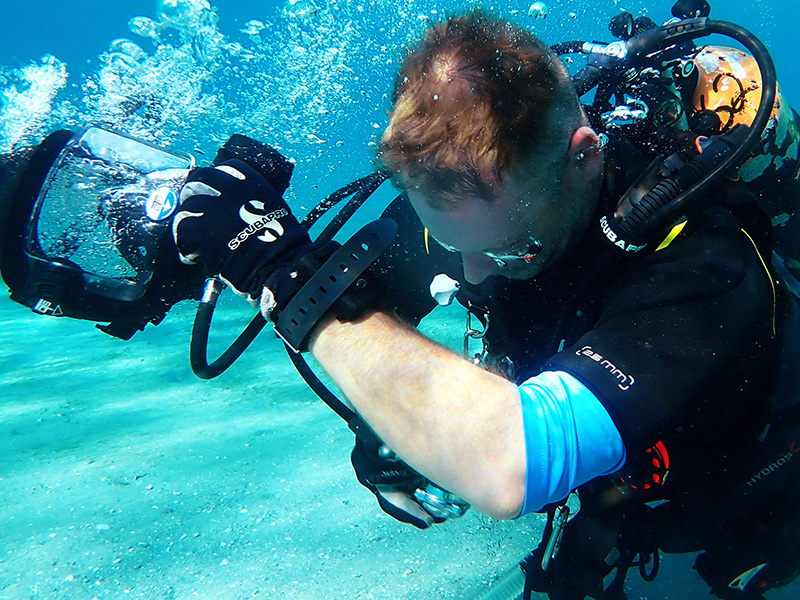
A Full Face Mask, often abbreviated as FFM, is a scuba mask that covers the entire face and integrates the regulator into the mask body. Unlike traditional scuba equipment where the diver breathes from a separate second stage regulator held in the mouth, a Full Face Mask allows the diver to breathe through both the nose and mouth inside a sealed chamber.
Full Face Masks are commonly used in public safety diving, commercial diving, scientific operations, and increasingly in recreational diving for specific environments.
How a Full Face Mask Works
A standard scuba setup separates the mask and regulator. The mask provides vision and seals around the eyes and nose, while the regulator delivers breathing gas through a mouthpiece.
A Full Face Mask combines these components. The breathing gas is delivered directly into the mask’s internal oro-nasal pocket. Exhaled gas is routed through one-way valves and exhaust systems designed to prevent carbon dioxide buildup. The seal runs around the outer perimeter of the face, creating a watertight chamber.
Many Full Face Masks also allow for:
- Surface air valve systems
- Integrated communication units
- Quick-change second stage regulators
Why Divers Use Full Face Masks
Full Face Masks are not simply comfort upgrades. They are tools designed for specific operational needs.
Thermal Protection
Because the mask seals around the entire face, it significantly reduces heat loss in cold water. Exposing less skin to water can improve comfort and reduce facial numbness in low-temperature conditions.
Breathing Through the Nose
Divers can breathe naturally through both the nose and mouth. This can feel more intuitive for some users and may reduce jaw fatigue during long dives.
Communication Systems
Many Full Face Masks support hard-wired or wireless underwater communication systems. This is especially valuable for:
- Public safety divers
- Scientific teams
- Instructional settings
- Surface-supplied operations
Clear communication can increase efficiency and improve safety in team-based environments.
Differences From Traditional Scuba Masks
Switching from a standard mask and regulator to a Full Face Mask changes several aspects of diving.
- Mask clearing procedures differ
- Bailout systems must be planned
- Emergency protocols change
- Gas management remains the same, but equipment familiarity becomes critical
Because of these differences, training and practice are essential before using a Full Face Mask in open water.
Emergency Considerations
With a traditional setup, losing the regulator means simply replacing it with an alternate air source. With a Full Face Mask, the breathing system is integrated. Divers must be comfortable with:
- Switching to a bailout regulator
- Removing and replacing the mask underwater
- Managing free flows or seal issues
Redundancy and procedural clarity are especially important in professional applications.
Who Should Consider a Full Face Mask
Full Face Masks are commonly used by:
- Public safety dive teams
- Commercial divers
- Scientific researchers
- Cold-water recreational divers
- Instructors who benefit from underwater communication
They are not necessary for most recreational diving environments, but in the right context they provide functional advantages that traditional equipment does not.
The Role of Training
Using a Full Face Mask introduces new equipment configurations and emergency procedures. Divers should receive formal instruction and spend time practicing skills such as mask removal, bailout transitions, and communication setup.
Like any specialized diving tool, a Full Face Mask is most effective when the diver understands both its benefits and its operational demands.
When used correctly, it expands what is possible underwater while maintaining the same core principles that govern all safe scuba diving.